Emergency
What to do in the first hour after water damage
Updated
Short answer
Stop the water at the main shutoff, keep away from wet outlets and cords, move valuables off wet floors, photograph everything, and call for extraction and drying. In a slab home, the first few hours decide how far water spreads into walls and cabinets.
1. Stop the water
Close the main shutoff. In most Arizona homes it's where the water line enters the house, often in the garage or near the front hose bib. If you can't find it or it won't turn, close the valve at the meter box near the street (you may need a meter key or large wrench).
If the leak is from one fixture, close its valve: under the sink or toilet, behind the washer, or the cold-water inlet on top of the water heater. For a swamp cooler, close its supply line.
2. Make it safe
- If water is near outlets, cords or the electrical panel, don't walk through it. Cut power at the breaker only if you can reach the panel standing on a dry surface.
- Keep children and pets away, especially if the water came from a toilet, sewer or outside.
- Stay out from under sagging ceilings.
3. Protect belongings
- Move electronics, rugs, papers and photos off wet floors.
- Put foil or plastic blocks under furniture legs that must stay.
- Hang up rugs and upholstery cushions if you can.
4. Document everything
Take photos and video of the source, the water, and every damaged room before anything is moved or thrown out. Include close-ups of the failed part (a burst hose, a leaking tank) and wide shots of each room. Keep receipts for anything you buy.
5. Start drying
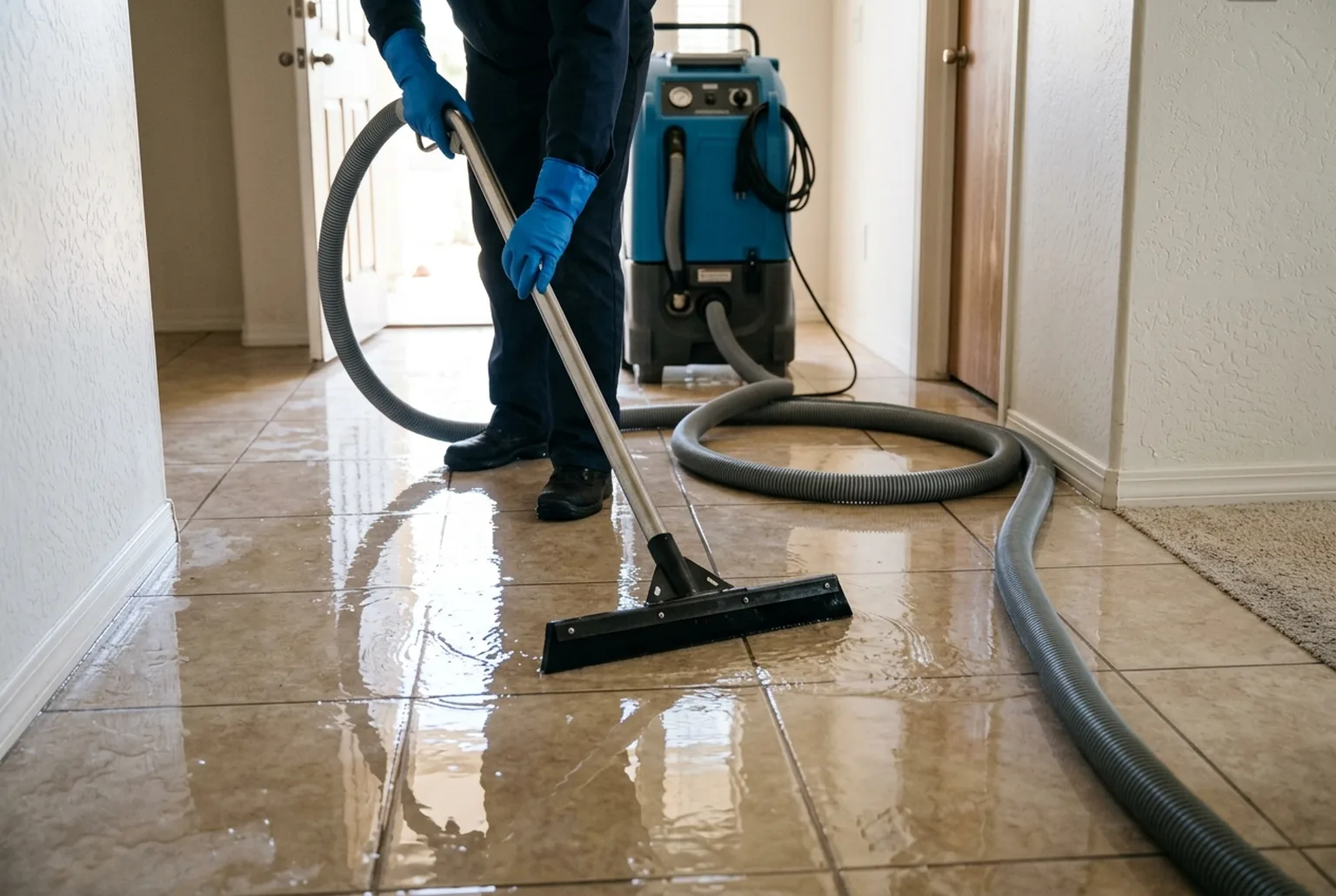
Mop up what you can on hard floors. Keep interior doors open and run the AC; in monsoon season, keep windows closed because outside air can be more humid than inside. For anything more than a small spill, get professional extraction and moisture mapping — surfaces dry fast in Arizona while the slab, pad and wall cavities stay wet.
Questions
Should I call my insurance company first?
Is it safe to stay in the house?
How long do I have before mold grows?
Editorial note: this guide is general information for Arizona homeowners, not professional, legal or insurance advice. For your situation, talk to a licensed contractor and your insurer.