Pima County · 13 towns · 52 ZIP codes
Water damage help in Tucson & Pima County
Tucson and the rest of Pima County sit in the Sonoran Desert at roughly 2,400 to 3,000 feet, ringed by the Santa Catalina, Rincon, Santa Rita and Tucson mountains. Water damage here follows the seasons: monsoon storms from mid-June through September, winter rains that soak older roofs, and slab and supply-line leaks all year.
Phones answered 24/7. Response times depend on location.
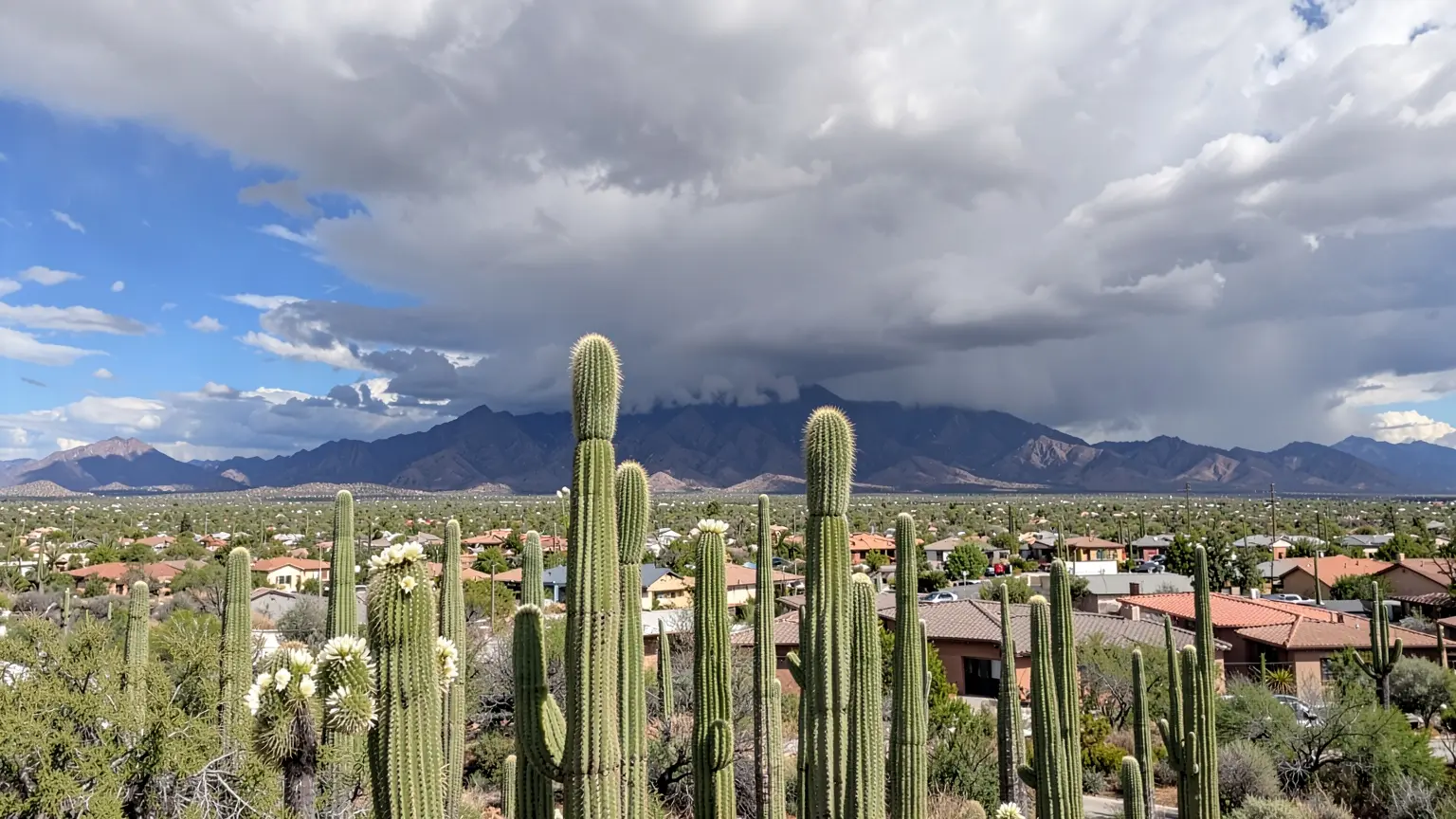
The metro mixes 1950s–1970s block and slab homes in central Tucson with 1980s–2000s stucco subdivisions on the northwest and east sides, newer master-planned communities in Marana, Sahuarita and Vail, and retirement communities in Green Valley and Saddlebrooke. Each era fails a little differently, which is why the city pages below go into detail.
Climate and water damage
Hot, dry summers with a strong monsoon; mild winters with occasional hard freezes on the valley floor and snow on Mount Lemmon. Tucson typically gets about half of its yearly rain during the monsoon, often in short, intense storms that overwhelm washes and streets.
Housing
Flat and low-slope roofs (built-up and foam) are common on older central and midtown homes; many still use roof-mounted evaporative coolers. Copper supply lines under the slab are common in homes from the 1960s to 1990s. Newer areas use PEX and have water heaters in garages.
What causes water damage here
Monsoon roof and wash flooding
Clogged scuppers on flat roofs, wind-driven rain through older tile underlayment, and wash overflow near the Rillito, Pantano, Tanque Verde and Santa Cruz channels are recurring monsoon problems.
Swamp cooler leaks
Tucson still has a high share of homes with evaporative coolers. Stuck floats and rusted pans leak through the roof jack into ceilings during the April–September cooling season.
Slab leaks and hard water
Hard water and older copper under the slab lead to pinhole leaks; warm floor spots and a meter that moves with everything off are the tell-tale signs.
City pages in Tucson area
Local guides in Tucson area
Water still spreading? Every hour counts — call now.Phones answered 24/7. Free call, connected to a local restoration company.
(833) 893-1539Every town and ZIP we cover
All 52 ZIP codes below are accepted by the request form.
- Ajo85321
- Arivaca85601
- Green Valley85614, 85622
- Lukeville85341
- Marana85653, 85658
- Mount Lemmon85619
- Rillito85654
- Sahuarita85629
- Sasabe85633
- Sells85634
- Topawa85639
- Tucson85701, 85704, 85705, 85706, 85707, 85708, 85709, 85710, 85711, 85712, 85713, 85714, 85715, 85716, 85718, 85719, 85721, 85723, 85724, 85726, 85730, 85734, 85735, 85736, 85737, 85739, 85741, 85742, 85743, 85745, 85746, 85747, 85748, 85749, 85750, 85755, 85756, 85757
- Vail85641
Availability
Calls from all Pima County ZIPs on this page reach restoration pros serving the Tucson metro. For remote areas such as Ajo, Lukeville, Sells, Sasabe and Arivaca, travel times are longer and availability varies — the call will tell you what's possible.
Permits and licensing
Drying and mitigation usually don't need a permit. Rebuild that involves plumbing, electrical or structural work does: the City of Tucson, Town of Oro Valley, Town of Marana, Town of Sahuarita or Pima County Development Services (for unincorporated areas) issue permits depending on where you live. Verify any contractor's ROC license at roc.az.gov.
Questions about Tucson area
When is monsoon season in Tucson?
Do you cover the Tohono O'odham Nation and western Pima County?
Who issues building permits for repairs in unincorporated Pima County?
Water where it shouldn't be?
Shut off the water, then call. Phones answered 24/7. Local restoration pros are ready to help.