Emergency-capable · Arizona
Water heater and appliance leak damage
Water heaters, washing machine hoses, dishwashers and fridge ice-maker lines are some of the most common sources of indoor water damage. Shut off the appliance's water valve, then have the area extracted and dried. Arizona's very hard water wears these appliances and their connections out faster.
Free call · Phones answered 24/7
- Phones answered 24/7
- 417 Arizona ZIP codes
- Local Arizona pros
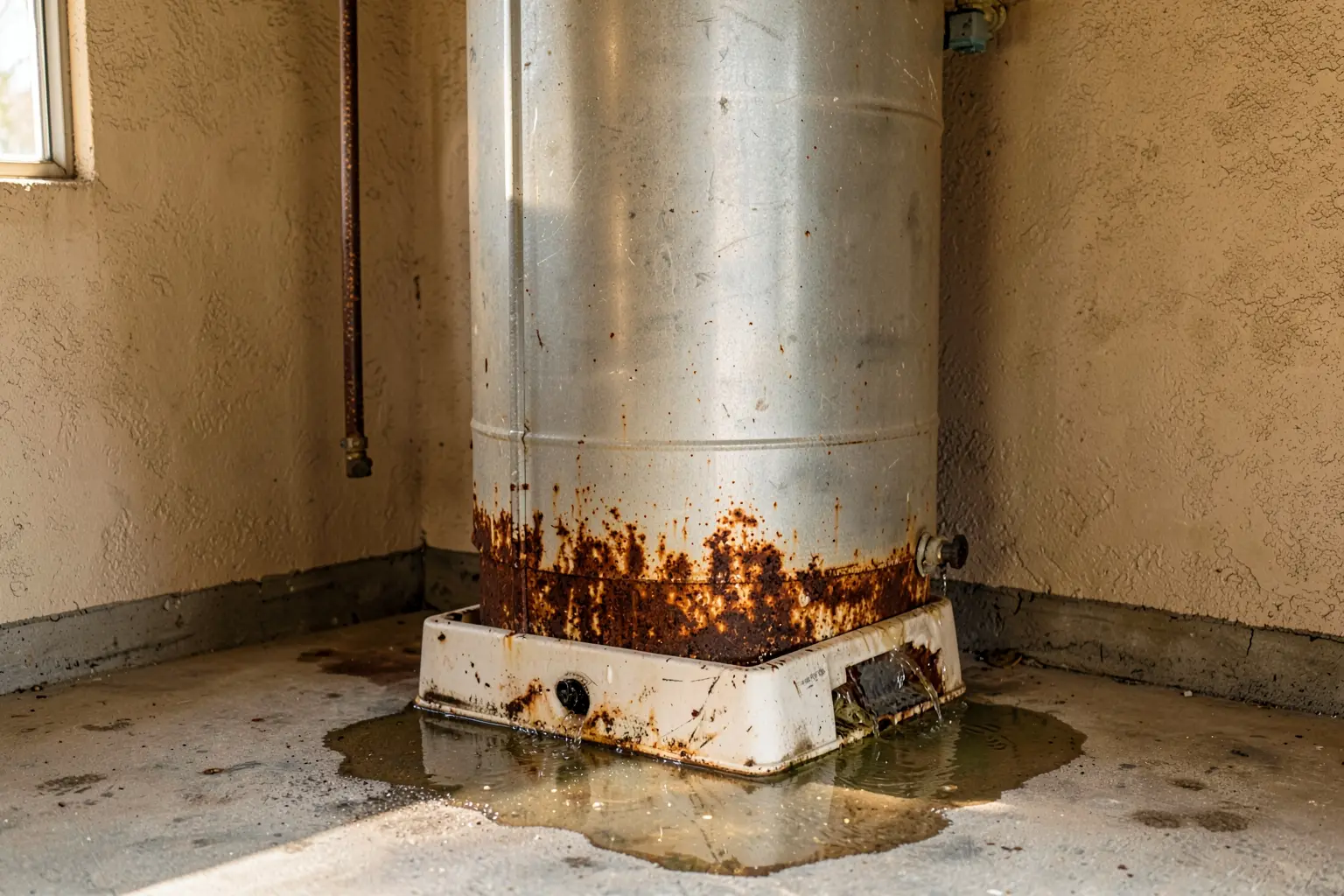
Arizona has some of the hardest municipal water in the country. Minerals build up as scale in water heater tanks, corrode anode rods and fittings, and stiffen rubber washer hoses. Water heaters in Arizona commonly live in the garage, a closet or the attic; an attic tank failure sends water straight through the ceiling.
Appliance leaks are often slow: a dripping dishwasher connection or a weeping fridge line can run for weeks under cabinets and flooring before anyone sees it. A technician finds how far the water traveled, which is often further than the visible puddle.
Water heater & appliances at a glance
- Most common
- Water heaters, washer hoses, dishwashers, ice-maker lines, sink supply lines
- Arizona factor
- Hard water shortens tank and hose life
- Attic water heaters
- Common in some Valley homes; leaks go straight into ceilings
- Slow leaks
- Often run under cabinets and flooring for weeks
- Prevention
- Braided hoses, drain pans, leak sensors, regular flushing
Signs you need help
- Water pooling at the base of the water heater
- Rust-colored water or rusty streaks on the tank
- Swollen cabinet floor under the sink or dishwasher
- Warped flooring in front of the fridge or washer
- A ceiling stain below an attic water heater
Water still spreading? Every hour counts — call now.Phones answered 24/7. Free call, connected to a local restoration company.
(833) 893-1539What the restoration company does
- 1
Shut off
The appliance valve (or the main) is closed. For a water heater, the cold inlet valve is closed and power or gas is turned off.
- 2
Trace the water
Meters follow the water under cabinets, flooring and into adjacent walls.
- 3
Remove and dry
Toe-kicks, cabinet backs or baseboards may be removed so hidden areas can dry.
- 4
Replace and document
A plumber replaces the heater or connection; the drying record supports the claim.
What affects the cost
Every loss is different, so there's no honest flat price. These are the factors that move the estimate:
- How long the leak ran
- Cabinetry involved
- Flooring type
- Attic versus garage location
- Appliance replacement (separate from drying)
Safe to do yourself
- Close the valve behind the appliance or the water heater's cold inlet
- Turn off the water heater's power or set gas to pilot/off
- Pull the appliance out only if it is safe and power is off
- Photograph the model plate and the failed part
Stop and call if
- Water heater is leaking from the tank body (it needs replacement)
- Water reached outlets or the panel
- Cabinet floors are swollen or soft
Not sure what you're dealing with? Call — it's free.Phones answered 24/7. Free call, connected to a local restoration company.
(833) 893-1539Water heater & appliances questions
How long do water heaters last in Arizona?
What's the best washer hose to prevent leaks?
Can water-damaged cabinets be saved?
Is appliance leak damage covered by insurance?
My water heater is in the attic. Is that a problem?
Does a water softener prevent these leaks?
Where this service is available
Across our 417 Arizona ZIP codes. Local details for:
Related services
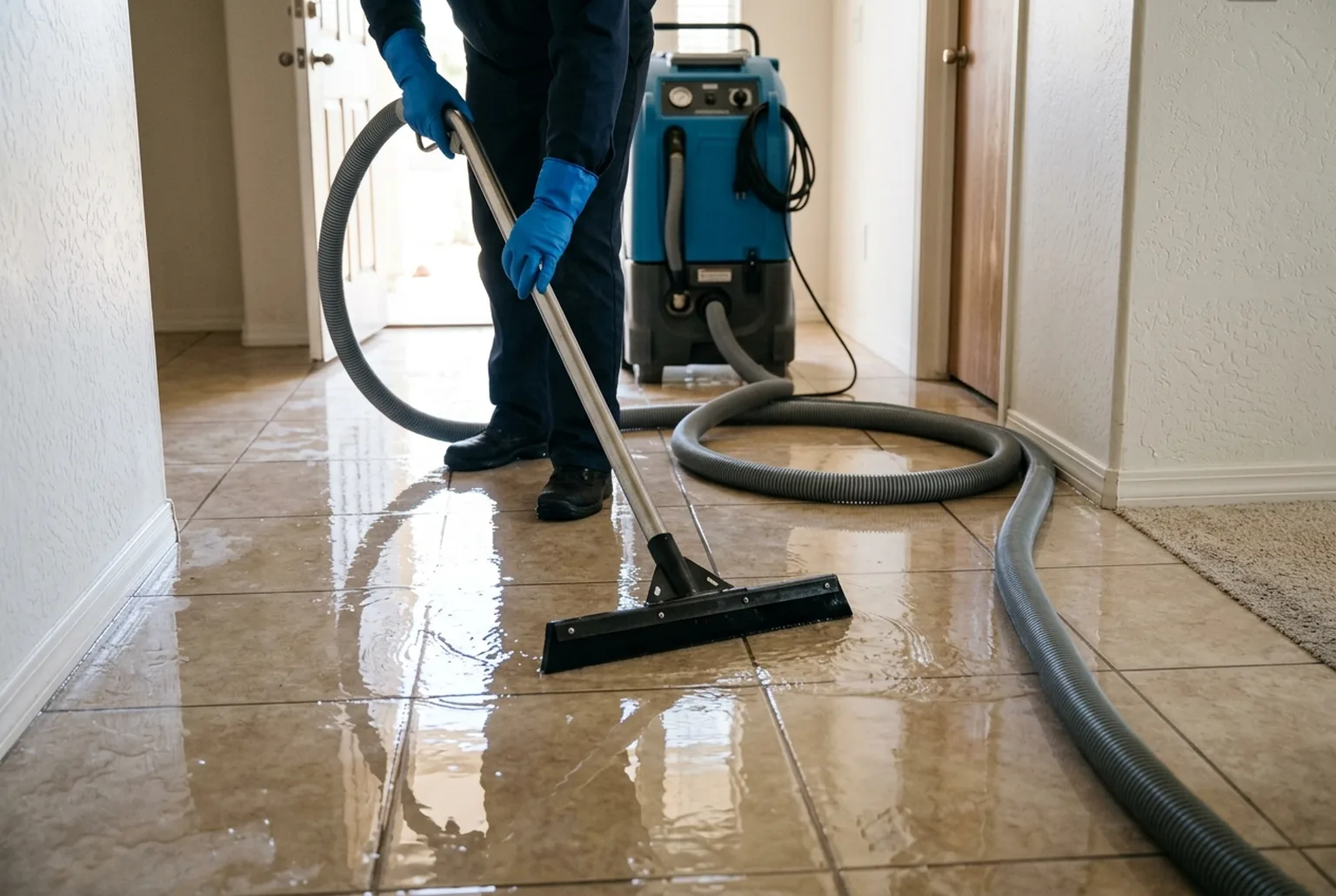
Emergency Water Extraction
Water extraction is the first step after a leak or flood: a restoration crew pumps and vacuums standing water out of floors, carpet and pad so drying can start.
Learn more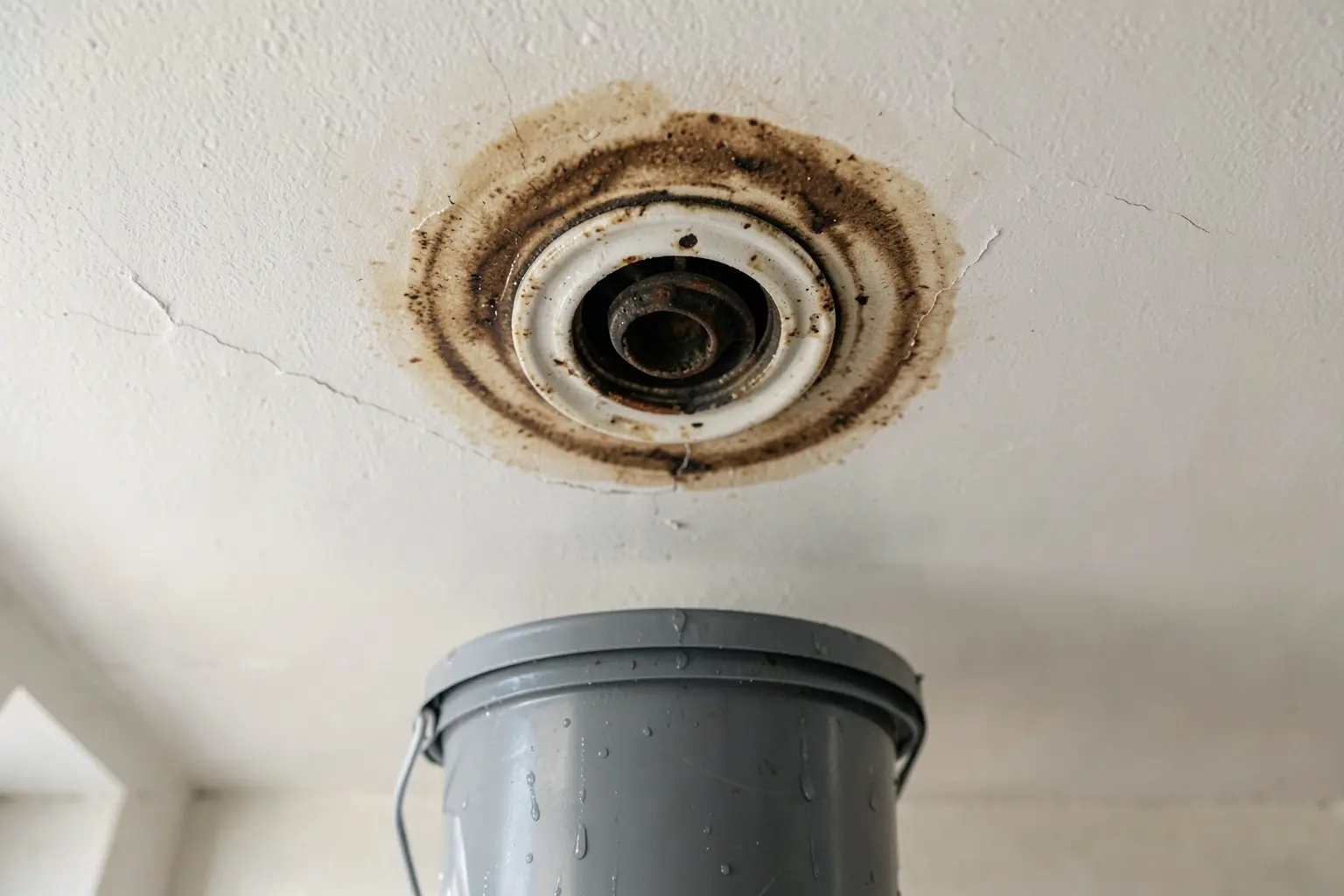
Ceiling Water Damage
A wet ceiling means water is above it: a roof leak, an attic water line, an AC condensate overflow, a swamp cooler or a bathroom upstairs.
Learn more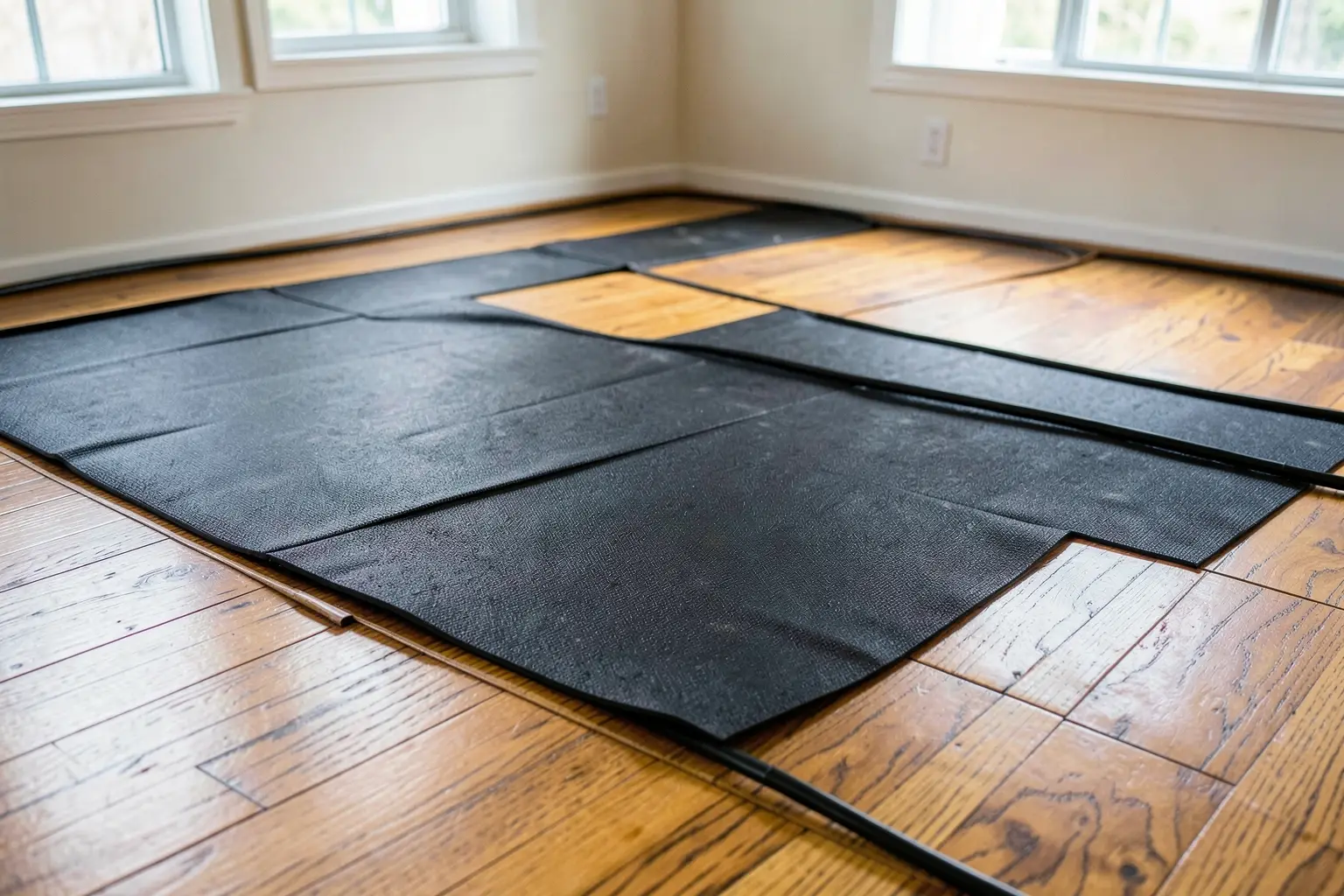
Wood & Laminate Floor Water Damage
Hardwood and engineered wood floors can often be saved if specialized floor drying starts within a day or two; laminate and many vinyl plank floors trap water on the slab and usually have to be lifted.
Learn more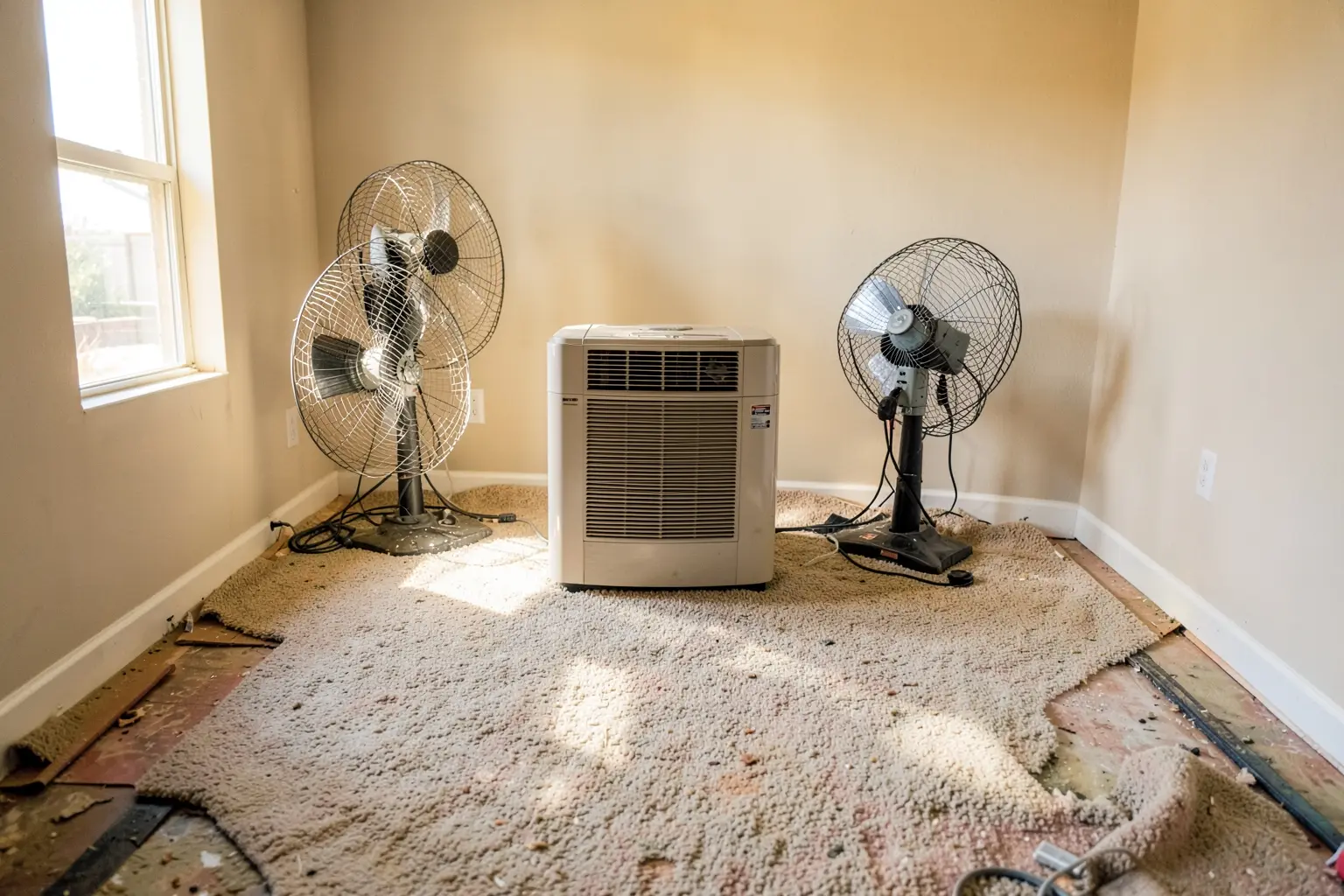
Structural Drying & Dehumidification
Structural drying removes water that has soaked into the slab, drywall, framing and cabinets after the standing water is gone.
Learn moreGuides
Water where it shouldn't be?
Shut off the water, then call. Phones answered 24/7. Local restoration pros are ready to help.