Seasonal
Protecting a vacant or seasonal home from leaks
Updated
Short answer
The simplest protection for a home you're leaving for weeks is to shut off the main water and turn off or lower the water heater. Add leak sensors or an automatic shutoff, set the AC or heat to protect the house, and have someone check in regularly.
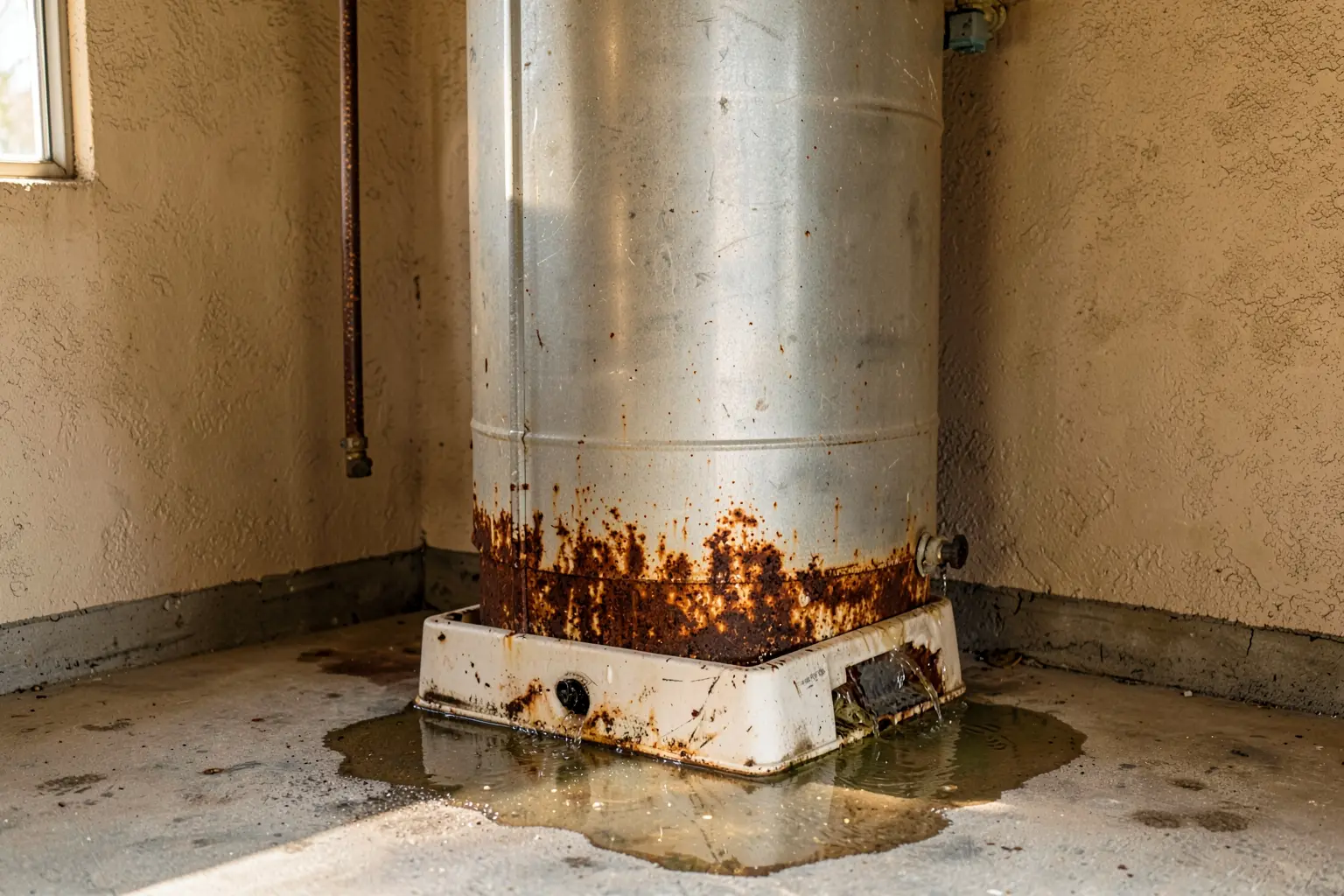
Before you leave
- Shut off the main water valve (and the irrigation supply if it's separate and not needed).
- Turn the water heater off or to vacation mode.
- Set the AC in summer (many owners use the mid-80s °F) or heat in winter (at least the mid-50s °F in freezing areas) to protect the home.
- Turn off the ice maker and the swamp cooler water supply.
- Install leak sensors under sinks, near the water heater and washer, ideally with phone alerts.
- Consider an automatic whole-house shutoff valve.
- Arrange a neighbor, friend or home-watch service to visit regularly.
Why vacant-home leaks are so damaging
A supply line or water heater failure in an occupied home is usually found in minutes. In an empty home it can run for days or weeks, soaking the slab, walls and cabinets and giving mold time to grow. That's why Arizona retirement and resort areas — Sun City, Green Valley, Lake Havasu, Yuma, Payson, Show Low — see so many of them.
Insurance and vacancy
Many homeowners policies limit coverage when a home has been vacant or unoccupied for a set period, and some exclude freeze damage if heat wasn't maintained or water wasn't shut off. Read your policy's vacancy and freeze terms, and ask your agent about seasonal-home coverage.
If you find a leak on return
- Shut off the water and power to wet areas.
- Photograph everything before moving anything.
- Call your insurer and a restoration company; ask for moisture mapping, since water has had time to travel.
- Watch for mold, which is likely after long exposure.
Questions
Is it bad to shut off the water heater?
Do smart leak detectors work?
Should I drain the pipes?
Editorial note: this guide is general information for Arizona homeowners, not professional, legal or insurance advice. For your situation, talk to a licensed contractor and your insurer.