Leaks & sources
Slab leak signs: how to tell if water is leaking under your floor
Updated
Short answer
The most reliable signs of a slab leak are a water meter that keeps moving with every fixture off, a warm spot on the floor (hot-line leaks), the sound of running water, and unexplained damp flooring or rising water bills. A plumber confirms the location; drying the damage comes after.
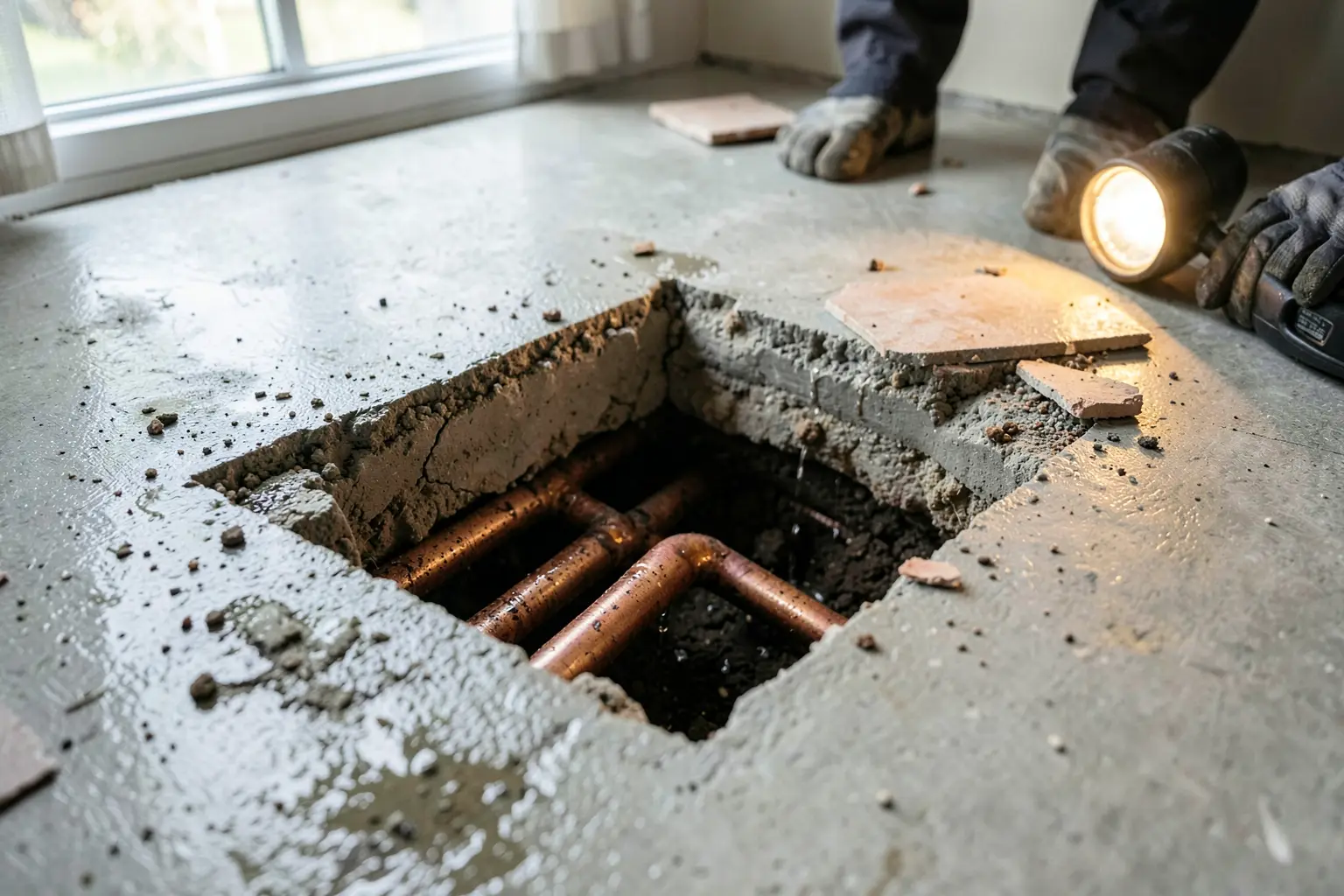
Common signs
- A warm or hot spot on tile or flooring
- Hissing or running-water sounds when nothing is on
- Water bill rising without changes in use
- Damp carpet, loose or cracked tile, or swelling baseboards away from bathrooms and the kitchen
- The water heater running more than usual
- Low water pressure
The meter test
Turn off every faucet, appliance, irrigation system and the ice maker. Find your water meter (usually in a box near the street) and watch the small leak indicator (often a triangle or dial). If it's moving, water is going somewhere.
Then close the house shutoff valve. If the meter stops, the leak is inside the house (possibly the slab). If it keeps moving, the leak may be in the line between the meter and the house.
Why Arizona homes get slab leaks
Many homes built from the 1960s to the 1990s run copper lines in or under the slab. Hard water, soil movement in expansive clay and caliche, and pipes rubbing against concrete or gravel wear through over time. Hot-water lines tend to fail first.
What happens next
- A plumber locates the leak with acoustic and thermal equipment.
- The line is repaired through the slab or rerouted through walls or the attic.
- A restoration company maps moisture, removes damaged flooring or baseboards, and dries the slab and walls.
- Your insurer is notified; many policies treat access and resulting damage differently from the pipe itself.
Questions
Can a slab leak damage my foundation?
Is rerouting better than repairing the slab?
How much water can a slab leak waste?
Editorial note: this guide is general information for Arizona homeowners, not professional, legal or insurance advice. For your situation, talk to a licensed contractor and your insurer.